



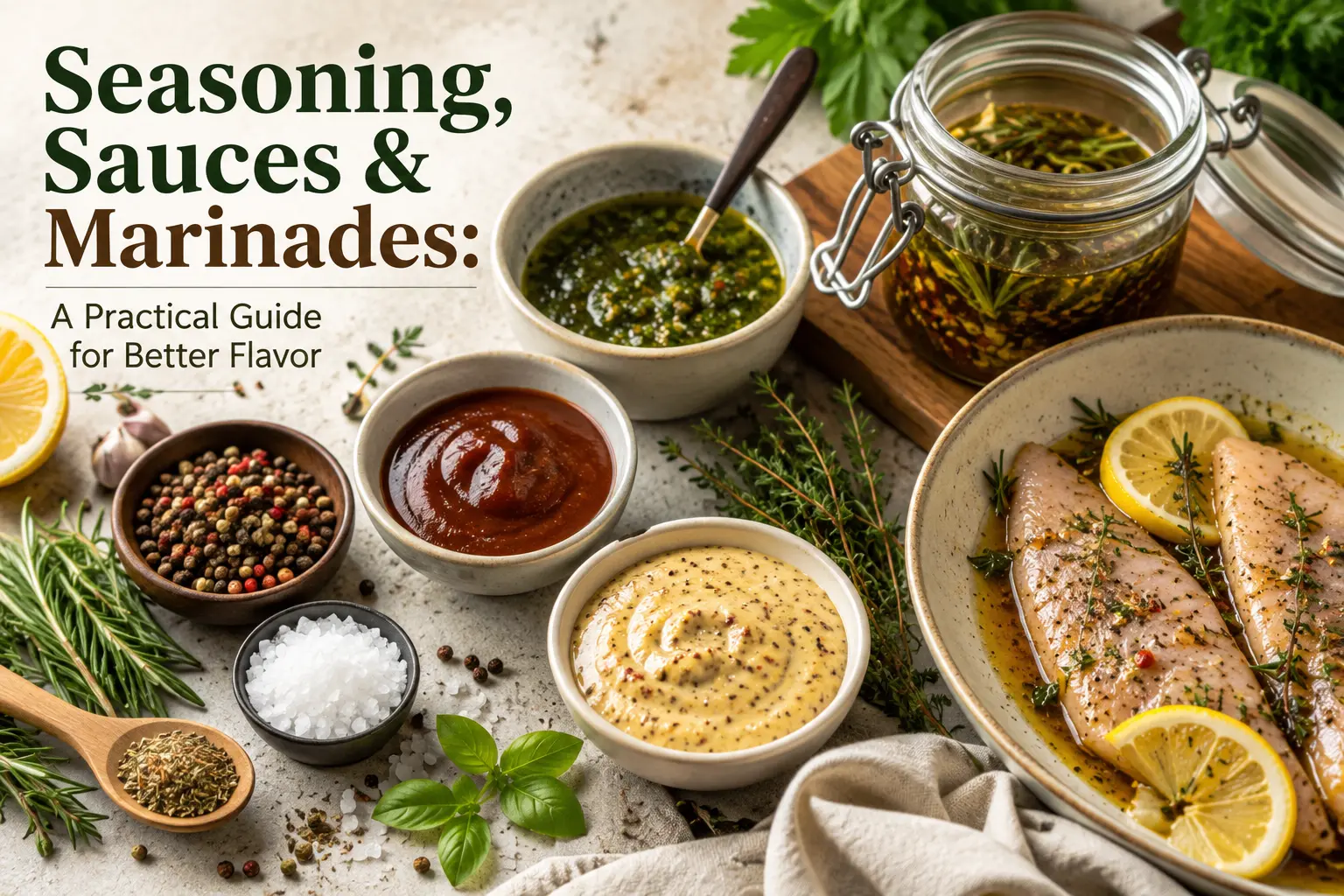
Have you ever cooked a meal that looked perfect but tasted dull? You followed the recipe, used the right ingredients, and cooked it for the right time. Still, the flavor felt missing. This happens to many home cooks. The issue is often not the recipe. It is how seasoning, sauces, and marinades are used.
From my own kitchen experience, I learned that adding more spices or pouring extra sauce does not fix bland food. In fact, it can make things worse. Fish can turn soft, chicken can taste salty outside and plain inside, and vegetables can feel boring. The real change came when I understood what to use and when. Once I learned the clear role of seasoning, dry rubs, marinades, and sauces, my food started tasting better with fewer ingredients.
What Is Seasoning?
Seasoning is usually dry. It is added before, during, or after cooking.
It includes:
- Salt
- Black pepper
- Herbs
- Spices
- Spice blends
Seasoning brings out the natural taste of food.
Popular seasoning blends in US kitchens
- Lemon pepper
- Cajun seasoning
- Italian seasoning
- Taco seasoning
- Chili lime seasoning
What Is a Dry Rub?
A dry rub is a stronger mix of spices and herbs used before cooking.
Best for:
- Grilling
- Roasting
- BBQ
Dry rubs create a flavorful crust when heat hits the food.
What Is a Marinade?
A marinade is a flavored liquid used before cooking.
It has three parts:
- Oil
- Acid like lemon juice or vinegar
- Flavor from herbs, garlic, or spices
Marinades add deep flavor. They tenderize meat like chicken and beef. For fish, they mostly add taste.
What Are Sauces?
Sauces are added during or after cooking.
They add:
- Moisture
- Richness
- Extra flavor
Examples:
- Lemon butter sauce
- Garlic herb sauce
- Barbecue sauce
- Tomato sauce
The Clear Difference
| Type | Form | When Used | Purpose |
| Seasoning | Dry | Before/During/After | Boost natural taste |
| Dry Rub | Dry | Before cooking | Strong flavor crust |
| Marinade | Wet | Before cooking | Deep flavor |
| Sauce | Wet | During/After | Moisture and richness |
When to Use What (Real Cooking Situations)
- Baking fish → light seasoning, sauce after
- Grilling steak → dry rub before, sauce after
- Frying chicken → marinade first, seasoning later
- Roasting vegetables → seasoning only
- BBQ wings → dry rub + sauce at the end
Best Seasonings for Fish Like Branzino
Fish is delicate. Keep flavours light.
Good choices:
- Salt and cracked pepper
- Lemon zest
- Garlic powder
- Oregano
- Paprika
- Fresh parsley and dill
If you are cooking branzino, these ideas connect directly with the step by step methods in the Branzino Cooking Guides on this blog.
Best Sauces for Branzino
Light sauces work best.
- Lemon butter sauce
- Garlic herb olive oil sauce
- White wine reduction
- Tomato and caper sauce
- Parsley and olive oil drizzle
Marinade Tips for Fish
Fish should not sit long in marinade.
Ideal time: 15 to 30 minutes
Simple fish marinade:
- Olive oil
- Lemon juice
- Garlic
- Oregano
- Salt
Long marinating can damage texture.
Marinating Time Chart
| Food | Time |
| Fish | 15–30 minutes |
| Chicken | 2–6 hours |
| Beef | 4–24 hours |
| Vegetables | 30–60 minutes |
5 Minute Homemade Sauces (For Busy People)
Lemon Butter
Butter, lemon juice, garlic, parsley
Garlic Herb
Olive oil, garlic, mixed herbs, salt
Honey Chili
Honey, soy sauce, chili flakes, garlic
Healthy Flavoring for Health-Conscious Cooks
Many bottled sauces contain extra sugar and sodium.
Better choices:
- Olive oil and herbs
- Lemon and garlic
- Yogurt based marinades
- Fresh spice blends
Always check labels if buying sauces.
Flavor Balance Rule
Try to balance:
- Salty
- Sour
- Sweet
- Spicy
- Savory
Example: lemon + salt + honey + garlic + chili flakes.
Common Mistakes
- Over seasoning
- Marinating fish too long
- Heavy sauces on delicate foods
- Forgetting salt in marinades
- Adding sauce too early and burning it
FAQs People Often Search
What is the best marinade for fish?
Olive oil, lemon, garlic, herbs for 20 minutes.
Dry rub vs seasoning?
Seasoning is simple. Dry rub is a strong spice mix for crust.
Are seasonings healthier than sauces?
Simple seasonings usually have fewer added ingredients than bottled sauces.
When should sauce be added?
After cooking or at the end.
Conclusion
Over time, one lesson became clear in my cooking. Great flavor does not come from using many ingredients. It comes from using the right method at the right time. Light seasoning, a short marinade, or a simple sauce at the end can change the whole dish. These basics work for meat, vegetables, and especially delicate fish like branzino. Keep these ideas in mind in your kitchen, and you will see how easy it becomes to cook food that tastes fresh, balanced, and full of flavor.
