



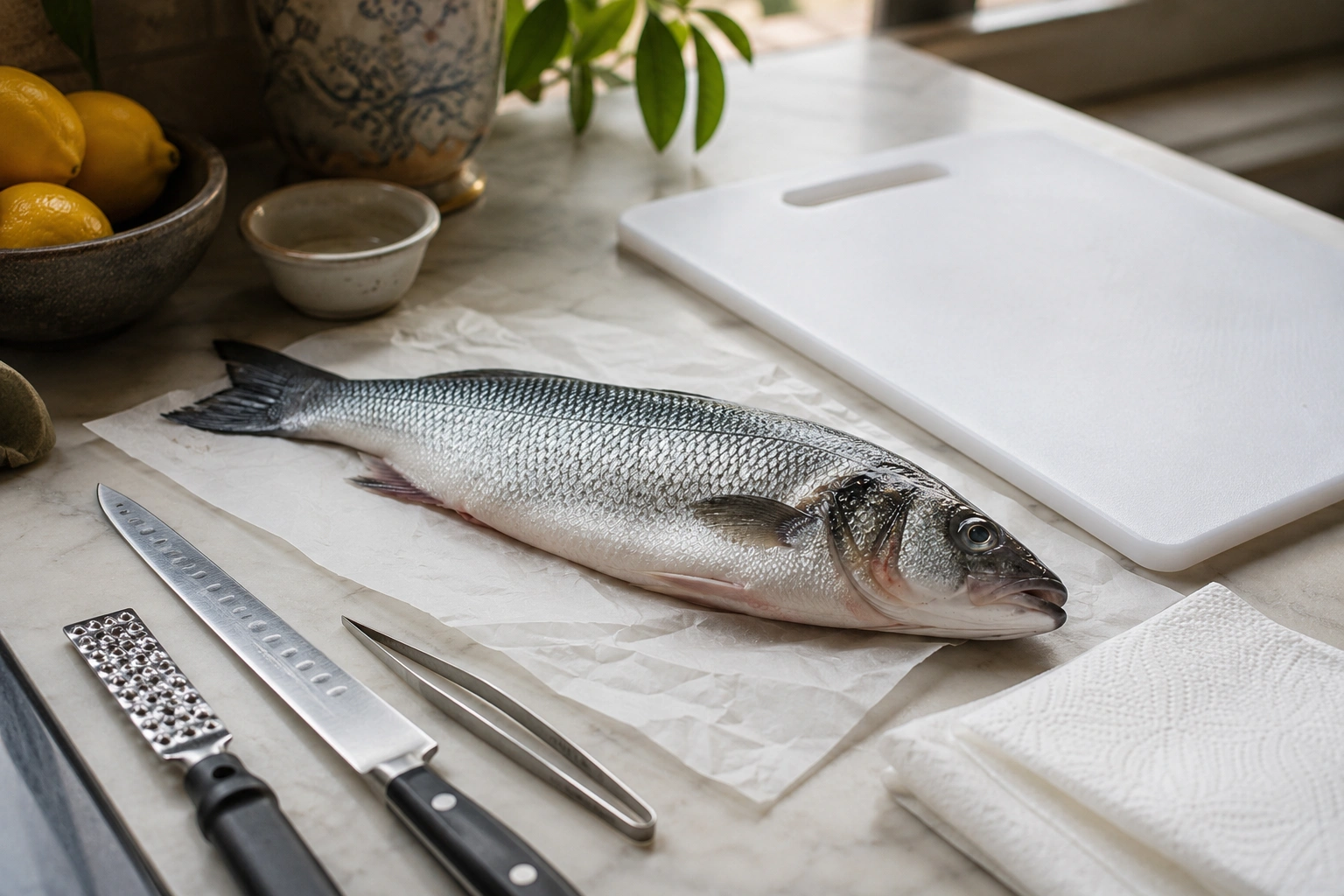
You bring home a whole branzino feeling excited to cook something special. Then you place it on the counter and pause. The fish looks delicate. You start thinking about scales flying, a bad smell in the kitchen, cutting in the wrong place, or leaving bones inside. Many home cooks stop at this moment and feel stuck before they even begin.
I faced the same problem the first time I tried to clean branzino. I made a mess in the sink, struggled with scales, and had no idea where the bones were. After repeating this many times, I learned a simple order that keeps the process clean, safe, and easy. Once you know what to look for and where to cut, branzino becomes one of the simplest fish to prepare at home. This guide follows that same method so you can avoid those early mistakes.
Total prep time for beginners: 12 to 15 minutes.
Why Proper Prep Matters
Clean prep keeps your kitchen safe. It makes cooking easier and improves taste.
If scales remain, the skin turns rough. If the belly is not cleaned well, smell spreads. If bones stay inside, eating becomes annoying.
Tools You Need Before You Start
- Sharp fillet knife (6–8 inches, flexible blade)
- Fish scaler or back of a knife
- Kitchen scissors
- Tweezers for pin bones
- Plastic cutting board
- Paper towels
- Bowl of cold water
Know the Parts Before You Cut
- Backbone: main center bone
- Rib bones: curved bones near the belly
- Pin bones: small thin bones in the fillet
- Belly cavity: where guts are stored
- Skin side and flesh side: helps control knife angle
Step 1: Rinse and Inspect the Fish
Rinse under cold water to remove slime.
Check freshness:
- Clear eyes
- Fresh ocean smell
- Firm body
- Bright red gills
Pat dry with paper towels.
Step 2: Remove the Scales (Inside the Sink)
Hold the tail. Scale from tail to head on both sides. Rinse again.
Step 3: Gut the Fish
Insert the knife near the tail. Cut up to the head.
Remove all guts. Scrape the dark lining gently. Rinse well.
Step 4: Trim Fins and Head (Optional)
Use scissors for fins. Keep or remove the head based on how you will cook it.
Step 5: How to Hold the Fish While Cutting
Keep the fish flat. Hold the head side with your non-cutting hand.
Keep the knife almost flat, not straight down.
Step 6: Fillet the Branzino and Remove Bones
Cut along the backbone from head to tail.
Slide the knife slowly to separate flesh from bones.
Trim rib bones. Remove pin bones with tweezers. Feel with fingers to find them.
Step 7: Final Drying (Do Not Rinse Fillets)
Do not rinse fillets. Wipe clean using paper towels until fully dry.
Safety and Hygiene Tips
- Wash hands before and after handling fish
- Use a separate cutting board for fish
- Clean knife, board, and sink with soap after use
- Never use the same board or knife for vegetables without washing first
When You Should NOT Fillet Branzino
Keep the fish whole if you plan to grill, roast, or stuff it.
How to Store After Prep
- Wrap fillets in paper towel
- Place in an airtight box
- Store in the coldest part of the fridge
- Use within 24 hours
For freezing, wrap tightly and use within 2 to 3 weeks for best quality.
Waste Disposal Tip
Wrap scales and guts in paper before putting them in the bin to avoid smell.
Common Mistakes and Quick Fixes
Scales not coming off? Use firm strokes from tail to head.
Flesh tearing? Knife is dull.
Bones left? Feel with fingers and remove with tweezers.
Bad smell? Fish was not fresh.
Complete Branzino Cleaning & Cutting Checklist
- No scales on skin
- Belly cleaned properly
- Rib bones and pin bones removed
- Fillets fully dry
- Tools and board washed
- Fish stored safely if not cooking now
What You Can Do After Prep
Now the fish is ready to pan sear, roast, or grill easily.
FAQs
Do I need to remove the skin? No. It becomes crispy when cooked.
Can beginners fillet branzino? Yes. The bone structure is simple.
Should I wash fish with vinegar or salt? No. Plain cold water before cutting is enough.
Conclusion
After you clean and cut branzino a few times, the fear fades away and the process starts to feel natural. You know how to scale without mess, how to open the belly neatly, how to guide the knife along the backbone, and how to remove small bones by touch. From my kitchen experience, this step is what makes cooking branzino enjoyable. You save money by buying whole fish, you get fresher fillets, and you gain a skill many home cooks avoid. The next time you bring home whole branzino, you will start with confidence instead of hesitation.
